
 English
  عربى
عربى 



Noticias de la industria
Inicio / Noticias / Noticias de la industria / What Happens to Inert Gases in a CVD Furnace Chamber? A Technical Guide
What Happens to Inert Gases in a CVD Furnace Chamber? A Technical Guide
Fecha:2026, 08, 24
A process engineer opens the gas panel of a CVD reactor, sets the mass flow controller to 200 sccm of argon, and watches the chamber pressure settle at 5 Torr. Over the next two hours, roughly 24 standard liters of argon will pass through the hot zone and leave through the vacuum line. Chemically, almost every molecule will be identical at the outlet to what it was at the inlet. Inert gases in a CVD furnace chamber are not consumed by the deposition reaction, yet the process would fail without them.
Core conclusion: Inert gases in a CVD chamber perform four jobs and then exit through the exhaust. They purge the chamber of oxygen and moisture, carry precursor vapors to the substrate, set the total pressure and dilution ratio, and enable controlled cooling, all without participating in the chemical reaction. The failure to understand their flow path is one of the most common causes of film contamination and thickness non-uniformity.
Contenido
- 1 The Short Answer: Four Jobs, One Exit
- 2 Where the Molecules Actually Go
- 3 Nitrogen, Argon, or Helium: A Practical Comparison
- 4 The Hidden Metrics: Flow, Residence Time, and Thermal Conductivity
- 5 Where Inert-Gas CVD Dominates
- 6 Operating Procedure: Inert Gas in a CVD Run
- 7 Maintenance, Safety, and Compliance
The Short Answer: Four Jobs, One Exit
Every inert gas molecule that enters a CVD furnace chamber follows the same physical path: in through the mass flow controller, over the heated substrate, and out through the exhaust line to the vacuum pump or abatement system. Along the way it performs four distinct jobs.
1. Purge and protect
Before heating begins, inert gas sweeps out air, oxygen, and water vapor that would otherwise oxidize substrates and chamber hardware at deposition temperature.
2. Transport precursors
The inert stream carries precursor vapor from the bubbler or gas line to the substrate, acting as a carrier that controls how much reactant reaches the surface per second.
3. Regulate pressure
Inert gas fills the chamber to a target total pressure and dilutes reactive species, which directly controls deposition rate and film stoichiometry.
4. Enable cooling
A vacuum is an excellent insulator, so backfilling with inert gas creates convective heat transfer that allows controlled cooling after deposition.
None of these tasks consume the gas. What reaches the exhaust is the inert gas itself plus unreacted precursors and byproducts such as hydrogen chloride or fragments of silane.
Where the Molecules Actually Go
Entry, heating, and expansion
The gas enters near room temperature through a mass flow controller and is heated as it moves through the inlet zone. In a hot-wall reactor the gas expands and accelerates before it reaches the substrate. This expansion changes the flow profile and affects how uniformly the precursor is delivered across the wafer or part.
The boundary layer and the substrate surface
At the substrate, velocity drops to zero in a thin boundary layer. Precursor molecules must diffuse through this layer to reach the growing film, while inert gas molecules simply pass over it without adsorbing or reacting. Thinner boundary layers improve film uniformity, so increasing inert flow helps, but only until turbulence starts to create thickness variations. This balance is the core of CVD process engineering.
The exhaust path and residence time
After passing the substrate, the inert gas carries unreacted precursors and byproducts toward a cold trap, scrubber, or vacuum pump. Residence time, set by the ratio of chamber volume to flow rate, governs how much precursor decomposes in the gas phase versus on the surface. Short residence times suppress gas-phase nucleation and particle formation.
When nitrogen is not truly inert
Nitrogen behaves inertly in many processes, but at temperatures above roughly 900 to 1000 °C it can react with titanium, aluminum, silicon, and similar materials to form nitrides. Even a few parts per million can shift film composition. Argon and helium avoid this risk entirely, which is why argon is the default carrier for high-purity deposition. Processes that demand this level of atmosphere control need a chamber built with the same integrity as a vacuum atmosphere furnace .
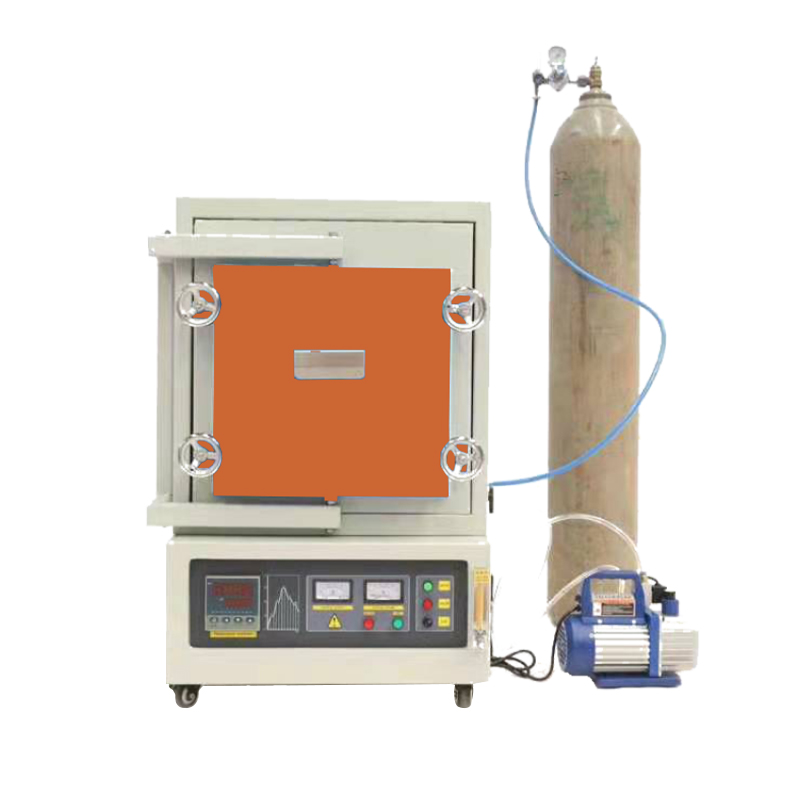 Vacuum Atmosphere Furnace Manufacturers, Suppliers, Factory Dengsheng Instrument is China Vacuum Atmosphere Furnace Manufacturer and Vacuum Atmosphere Furnace Supplier, Factory offer Custom Vacuum ... View Product →
 Nitrogen, Argon, or Helium: A Practical Comparison
Selecting the inert gas is a trade-off between cost, cooling performance, reactivity, and the purity requirements of the film.
Property
Nitrogen (N2)
Argon (Ar)
Helium (He)
Thermal conductivity (mW/m·K at 300 K)
25.8
17.7
151
Density (kg/m³ at 0 °C, 1 atm)
1.25
1.78
0.18
Typical purity used in CVD
99.999%
99.999%
99.999%
Nitride risk at 1000 °C
Yes
No
No
Relative cost per standard m³
Low
Medium
High
Best role in a CVD process
Low-cost purge and carrier
Carrier, purge, and cooling
Fast cooling, leak detection
Values apply to pure gases at standard conditions; behavior inside the chamber depends on pressure and temperature.
The table explains why argon dominates high-purity CVD: it combines low reactivity with moderate cost and acceptable cooling. Helium is reserved for rapid cooling. Nitrogen is the economical choice when nitride formation is not a concern.
The Hidden Metrics: Flow, Residence Time, and Thermal Conductivity
Beyond the gas species, three numbers control what actually happens inside the chamber: flow rate, residence time, and thermal conductivity.
N2
26
Ar
18
He
151
Relative thermal conductivity of inert gases in mW/m·K at 300 K.
Helium conducts heat roughly six times better than nitrogen and eight times better than argon, which makes it the fastest cooling gas. Nitrogen cools faster than argon per unit volume, but argon's higher density and lower cost make it the practical default for most recipes.
- Flow rate governs precursor delivery: typical carrier flows range from 50 to 500 sccm, while purge flows reach 1000 sccm or more.
- Residence time, typically a few seconds, equals chamber volume divided by volumetric flow.
- Partial pressure of each precursor equals its mole fraction times total pressure, so inert dilution fine-tunes deposition rate.
The practical consequence: for a given film thickness target, doubling the inert flow halves the precursor partial pressure and slows deposition, which usually improves film density and step coverage. This trade-off should be documented for every process recipe.
Where Inert-Gas CVD Dominates
Inert-gas CVD is used wherever film purity and precise atmosphere control are non-negotiable. The distribution of applications reflects that priority.
- Semiconductor and electronics: 40%
- Optical coatings: 25%
- Protective and wear-resistant coatings: 20%
- Energy and battery materials: 10%
- Research and development: 5%
Semiconductor fabrication remains the largest consumer because device geometry depends on the purity of the deposited film. Optical and protective coating manufacturers prioritize uniformity and repeatability, which require exactly the flow discipline described earlier.
Operating Procedure: Inert Gas in a CVD Run
A field checklist for running inert gas in a CVD chamber, based on the behavior described above, follows six steps.
1
Pump down
Evacuate the chamber to its base pressure, typically below 10⁻⁵ Torr, to remove residual air and moisture before any gas is introduced.
2
Perform purge cycles
Pressurize the chamber to about 700 Torr with inert gas, then evacuate, and repeat at least three times. Each cycle dilutes residual oxygen and water by roughly two orders of magnitude.
3
Stabilize carrier flow
Set the mass flow controller to the target carrier flow and wait ten minutes for steady-state flow before heating. This step prevents drift in precursor concentration at the start of deposition.
4
Ramp with flowing gas
Heat the substrate to deposition temperature under continuous inert flow. The flowing gas maintains a clean environment and prevents outgassed species from recontaminating the surface.
5
Deposit and monitor
Introduce the precursor while logging pressure, flow, and temperature. Any deviation in gas flow appears immediately in film thickness and composition, so verify mass flow controller calibration regularly.
6
Post-purge and cool
After deposition, stop the precursor and continue purging for at least ten minutes to sweep byproducts from the chamber. Then backfill with inert gas for controlled convective cooling.
For research-scale CVD, a purpose-built tube furnace with vacuum capability is the most common configuration. An antioxidant vacuum tube furnace with multiple temperature zones provides the clean atmosphere and uniform hot zone needed for reproducible films. Laboratories that handle moisture-sensitive substrates often add a nitrogen-filled drying oven for pre-baking between cleaning and loading. For teams that need to shift between tube and box formats, the high-temperature furnace series covers both in a single family of equipment.
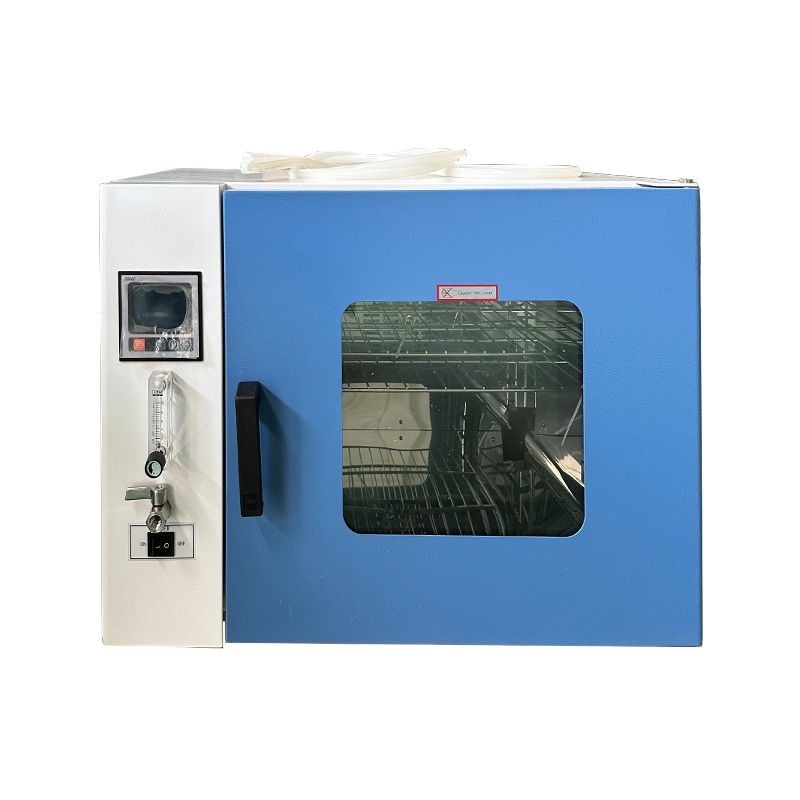 Nitrogen-Filled Drying Oven Manufacturers, Suppliers, Factory As China Nitrogen-Filled Drying Oven Manufacturers, Custom Nitrogen-Filled Drying Oven Suppliers and Factory, Dengsheng offer Custom Nitr... View Product →
 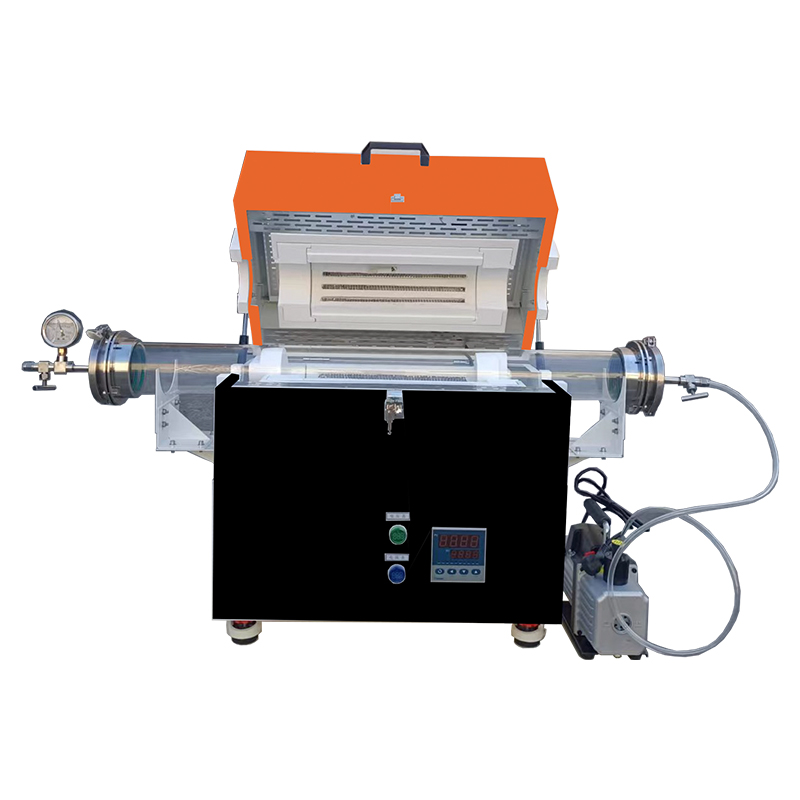 1200℃ 1400℃ 1700℃ Vacuum Tube Furnace Manufacturers, Factory As China Vacuum Tube Furnace Manufacturers and Vacuum Tube Furnace Factory, Dengsheng Instrument offer Custom 1200℃ 1400℃ 1700℃ Vacuum Tu... View Product →
 Maintenance, Safety, and Compliance
Inert gases are easy to handle, but the systems that deliver them demand the same rigor as the reactor itself. Gas purity, leak integrity, and exhaust treatment determine whether a CVD process stays within specification over months of operation.
Use 99.999% (five nines) purity or higher for deposition, with oxygen and moisture verified at or below 1 ppm. Lower-grade gas introduces water that oxidizes films and shifts deposition kinetics by a measurable margin.
Leak check the chamber and gas lines with a helium mass spectrometer on a regular schedule, targeting a sensitivity of at least 10⁻⁹ mbar·L/s. Small air leaks are the most common cause of unexplained film contamination.
Exhaust gas from the chamber may contain corrosive or toxic byproducts. Route the exhaust to a scrubber or abatement system and verify local environmental regulations. A cold trap protects the vacuum pump from condensable species.
Nitrogen and argon present an asphyxiation risk in confined spaces, so install oxygen depletion monitors in rooms that hold multiple gas cylinders. When precursors are flammable, the gas train should meet the same explosion-protection standards as the rest of the facility. A review of why manufacturers should not cut corners on explosion-proof equipment helps define an appropriate specification before purchase.
Inert gases leave a CVD chamber exactly as they entered, chemically speaking. The value of the process is in how carefully they are managed between the cylinder and the exhaust.
Enviar mensaje
Productos recomendados
Los productos ofrecidos por empresas famosas cuentan con la profunda confianza de los usuarios.

- CONTACTO
-
- No. 119, Qingliang Avenue, Yaozhuang Town, Zhejiang, China.
- [email protected] ( Correo Electrónico )
- +86-13671719019 ( Móvil )
- +86-021-57440136 ( Teléfono )
- PRODUCTO
- ENLACE RÁPIDO
- Inicio
- Productos
- Acerca de nosotros
- Producción
- Proyectos
- Noticias
- Contáctenos
- MÓVIL
Copyright ©
Shanghai Dengsheng Instrument Manufacturing Co., Ltd.
Todos reservados. Fabricantes de equipos de laboratorio

 Volver arriba
